Mixed Reactions From the Moving People Forward Conference
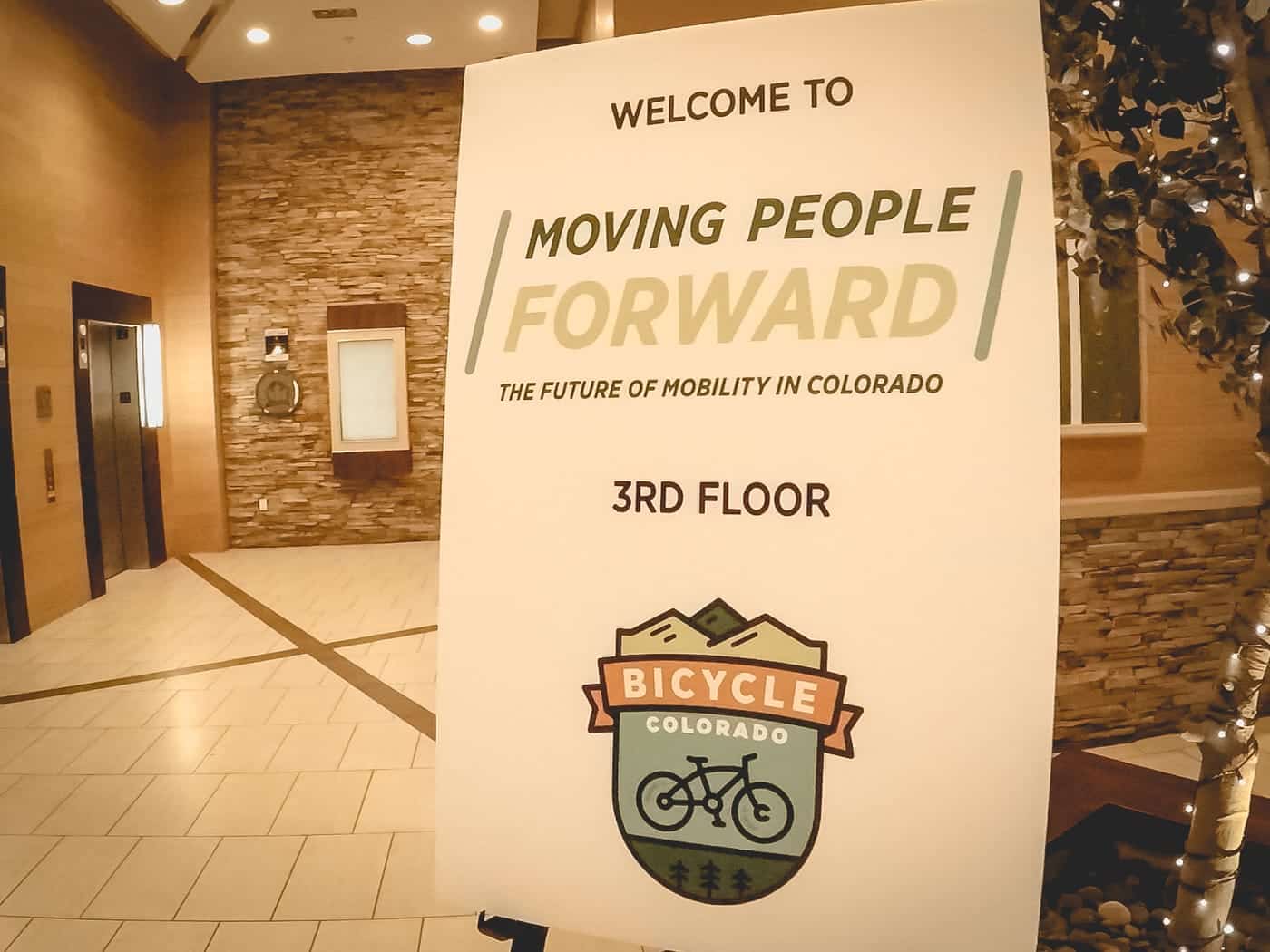
This past Monday I attended the Moving People Forward conference in downtown Denver. The conference was hosted by Bicycle Colorado in lieu of their annual Colorado Bike Summit which has been moved to later in the year.
Leaving the conference I had mixed emotions from my attendance. As I boarded the commuter rail back to my suburban neighborhood I asked myself a few questions.
What did I learn? What surprised me? How do I feel about mobility in Colorado after the day’s events?
Budget Over Vision

The ever inspiring Brent Toderian kicked off the day by reviewing how cities across the world are leading the transportation transformation, his experiences in Colorado the day before and his recommendations on how we could make positive changes to our state’s mobility planning. Within his slides, he showed examples of cities prioritizing humans and places over moving more cars. Brent also discussed how important a city or state’s budget is, and how the budget truly shows a city’s aspiration. I hope his speech was eye opening for those in the audience and a gut check that Colorado really isn’t doing many things well for transportation or mobility in our state.
After Brent, we heard from Denver’s Mayor Hancock. This is the moment in the conference I moved from excitement to hope. In his speech, there were standout quotes such as,
“We need to absolutely transform our city from a car-centric city to a people-centric network.”
Mayor Hancock
In the end, it turned out his war cry for a people-centric network is going to be funded by a proposed bond. This is a reasonable solution. No, it really is. We MUST find money to create safer streets and projects, but why aren’t we finding it in our current budget? Why are we continuing to prioritize transportation funding to vehicles instead of humans?
Colorado Governor Hickenlooper echoed Mayor Hancock in his commitment to biking. It seemed the governor’s aides did not clue him in that the conference was on moving people and not solely biking as 100% of his speech was on bicycling around Colorado. It would have been wonderful to hear about mobility and complete street projects across the state.
The Denver Director of Transportation and Mobility, Crissy Fanganello, led a great update on biking and walking in Denver. She spoke about the numbers for both walking and biking, and I would love to see her slides as she had to rush through a few of them due to timing. Her well-prepared presentation ended in a request for everyone in the room to drive safer and obey the speed limit. I believe Crissy meant well for this closing remark. It did come across as her turning the blame from the city’s infrastructure to the forward focused transportation audience in front of her. We will be jumping into this topic over the upcoming weeks and look forward to a heated discussion.
Data. What data?
One of the breakout sessions I sat in on was on the Data Revolution. As a recovering data analyst, I had great hopes that we would see jaw-dropping stats, graphs, and revolution creating numbers.
In reality, People for Bikes pitched their new program, Places for Bikes. Their Director of Research went through the details of the ranking system for places, and their goals of the program. It is an exciting carrot for cities and towns, and we will have a separate article on Places for Bikes soon.
Another company, See Click Fix, talked about their system to allow citizens to report concerns and issues through a central app or website to their city. The program looks amazing but will rely heavily on a city staffer to monitor and delegate the concerns.
Finally, Peter Kozinski, Director of the Colorado DOT RoadX Program discussed the uphill battle that CDOT has, and their RoadX Bicycle and Pedestrian Challenge to encourage public ideas on designing a better transportation system.
The open panel discussion at the end of the presentations was helpful and opened a dialogue between citizen, city and town stakeholders. It would be great to see a follow-up webinar on how agencies to citizens can use open source data to tell a compelling story. How can we use freely available data to make a sharpened pitch for clear channels of funding from the city, state?
Next Steps
These conferences always leave me equally inspired and perplexed on what the next steps are as a citizen, advocate and transportation catalyst.
How can I have a greater impact on the mobility and transportation cause? How can we educate and then amplify this social justice?
I will continue to tackle these questions and thoughts in the upcoming weeks with articles and videos on our Bike Law channels.

-
From Winner to Advocate: One Cyclist’s E-Bike Journey

Two years ago, on a family trip to Switzerland, my wife and I rented two electric-assisted mountain bikes, or e-MTBs, to tackle some steep trails near the Matterhorn. The salesperson said, in no uncertain terms, that the new e-MTBs were the way of the future, and we should give them a try. So we did. …
-
A Comprehensive Guide to E-Bikes in Louisiana: Laws, Tips, and Choosing the Best E-Bike

E-bikes are popping up everywhere. If you’re riding one in Louisiana or thinking about getting one, you may have questions about the laws, safety tips, and how to pick the right bike. That’s exactly what this post is here for! We’ll break down what you need to know about riding e-bikes in Louisiana, from legal…
-
The Lisa Torry Smith Act: A Win for Cycling Safety in Texas?
The Lisa Torry Smith Act brings important changes to Texas law. It makes clear that cyclists can ride in crosswalks and now requires drivers to stop and yield before entering a crosswalk with a pedestrian or cyclist. A gap in Texas law is allowing some drivers who hit people in crosswalks to get off scot-free,…
-
Far Right?! I was taking a LEFT!

Even Bike Law lawyers get hassled. Like many of us, riding for me is stress relief; it’s an escape from conflict and a busy schedule. Sometimes incidents on the road have the opposite effect and one incident this weekend made me question the state of humanity. It was not an unusual event, nor a particularly…
-
E-BIKES ARE LEGAL IN NC (WELL, SOME OF THEM)

Love them or hate them, e-bikes continue to rise in popularity. At the same time, lawmakers struggle to keep up with the developing technologies. Every week I get multiple inquiries from people trying to navigate North Carolina’s e-bike laws. If you’re confused, you’re not alone. We could easily fill a book with all the latest…
-
BIKES & CRIMINAL JUSTICE

Many of our cycling clients find themselves having to interact with the criminal justice system. Typically, it’s because the driver who hits them (or their family member) is charged with a crime or traffic offense. Occasionally bicyclists themselves are charged with traffic offenses! Every state’s criminal laws are different, but there is a lot of…
-
Another Successful Road Defect Case, This Time a $750,000 Settlement in Georgia

We recently shared the story of a trial victory from the State of Texas where a bicyclist was injured due to a defect in a road maintained by the Texas Department of Transportation. Texas Road Defect We now can tell the story of another huge win in a road defect case, this time from our Bike Law…
-
One Million Dollars for Texas Road Defect

The Texas Department of Transportation had offered cyclist Mike Bagg $0. Recently, attorneys with the Bike Law network took a case to a trial against a titan of a defendant: the Texas Department of Transportation. TxDOT was represented by the Attorney General’s Office, one of Texas’ largest legal teams. We had a great client, but it was…
-
More Roads = Better Transportation, And Other Myths
2023 got off to a rough start for Charlotte, North Carolina, particularly in the context of road safety. Within about a week, we lost a young woman who was riding her bicycle, a pedestrian killed in the same area of town, and four people were killed in a car wreck on I-85 in the University…