Group Riding in the Age of COVID
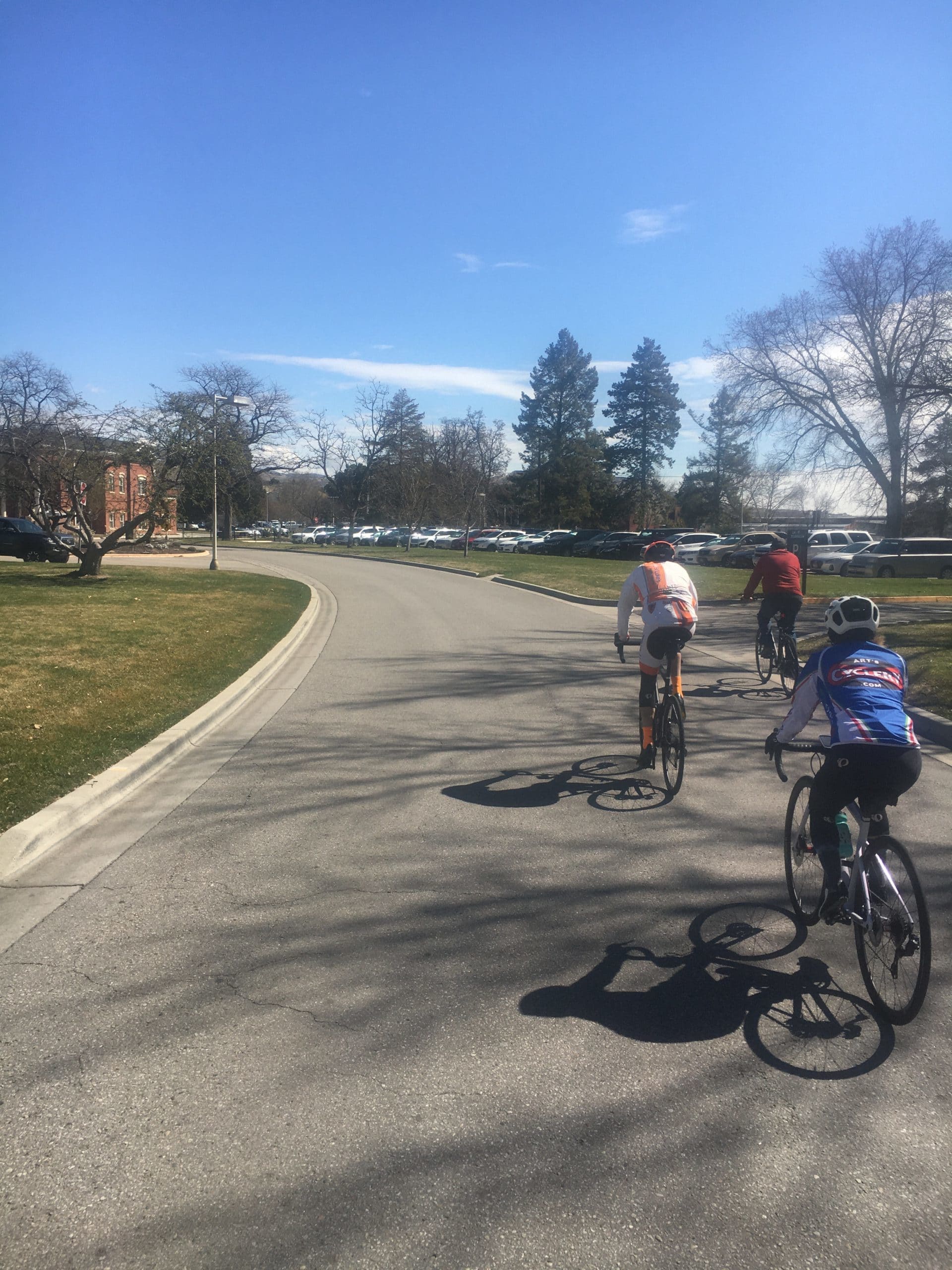
Thoughts from an Idaho , applicable everywhere.
Idaho’s Governor Little has issued the State’s planned staged transition away from his Stay-at-Home health order. Road cyclists continue to wonder how we should engage in group riding under COVID. As a bicycle accident lawyerhttps://www.bikelaw.com/ who deals with the negative aspects of cycling, I have been thinking a lot about when and how to ride safely in this very strange time.
Indoor spaces, with limited air exchange or recycled air and lots of people, have been identified as the main risk areas for transmission. The data we have to date shows the main sources for infection are: 1) home from an infected cohabitant, 2) workplaces, 3) public transport, 4) social gatherings, and 5) restaurants. These environments account for 90% or more of all identified transmission. To the extent we have data, contact tracing has shown only a single outbreak reported from an outdoor environment (less than 0.3% of traced infections).
We know that increasing our distance from others, decreasing the duration of exposure, and improving the ventilation of the air around us can all lower our personal risk of infection. Going for a bike ride on our own can do all three. Are there ways we can enjoy the comradery of group riding while staying safe?
Each stage of Idaho’s four-stages in the reopening plan is predicated in continuing some basic practices. The Governor’s order reinforces the idea that all of us have a responsibility to protect ourselves and others.
Summary of the planned phasing
In all reopening stages, basic practices include:
- Engage in physical distancing of at least six feet;
- Wear face coverings in public places;
- Stay home if sick;
- Practice good hand hygiene;
- Cover coughs and sneezes;
- Disinfect surfaces and objects regularly.
Stage One Gatherings (May 1-15): both public and private, should be avoided. Meaning that there should be no group riding during Stage One.
Stage Two Gatherings (May 16-29): both public and private, of less than 10 people, where appropriate physical distancing and precautionary measures are observed can occur. Vulnerable Idahoans should continue to self-isolate. Members of households with vulnerable residents should be aware that by returning to work or other environments where distancing is not always possible, they could carry the virus back home. Precautions should be taken to isolate from vulnerable residents.
Stage Three Gatherings (May 30-June 12): both public and private, of 10-50 people, where appropriate physical distancing and precautionary measures are observed can occur. Starting in Stage 3 vulnerable Idahoansresume public interactions, but continue physical distancing, minimizing exposure to social settings where distancing may not be practical, unless precautionary measures are observed.
Stage Four Gatherings (June 13-26): both public and private, of more than 50 people, where appropriate physical distancing and precautionary measures are observed can occur.
Thoughts On Group Riding Behavior Once Gatherings Are Allowed
BASIC PRACTICES FOR INDIVIDUALS:
Follow the basic practices listed for individuals in the Governor’s plan,
Only join if you are sure you are not sick, don’t have a temperature and have no indication you might be becoming sick.
SUPPLIES/REFRESHMENTS:
To decrease the likelihood of contact to the extent possible carry your own food and water rather than stopping at C-stores or impacting grocery stores.
FACE COVERING, SANITIZER AND GLOVES:
Have a face-covering (mask, buff, kerchief, scarf etc.) with you and wear it in any gathering area or meeting zone. These are often public locations where others are present.
Have your face-covering available and use it at ride stops, during flats/mechanical repairs or if you do go into a store for refreshments or a restroom.
Remove your riding gloves prior to touching anything.
Carry a small bottle of hand sanitizer with you and use it after any stops where you touch anything any other human could have touched.
PHYSICAL DISTANCING GUIDELINES IN GROUP RIDING:
Establish gathering and start locations in large parking lots that allow people to spread out while awaiting the start of the ride.
Keep ride groups to 8 or fewer cyclists to allow for safe spacing. Create sub-groups if needed.
Keep large gaps between subgroups. A 2-minute interval or 1000 yards will reduce chances that the subgroups will intermingle down the road.
Send faster paced subgroups first to reduce chances of subgroups intermingling.
Be aware of other riders/runners/walkers and pass with enough distance to keep all safe (see below).
While waiting at stop lights, continue to observe social distancing rules.
RELATIVE POSITION IN GROUP RIDING (Drafting):
Group ride participants should maintain safe spacing.
A fair recommendation is a three bike-lengths between bikes though the study referenced below can be interpreted as arguing for greater distances.
If two abreast, cyclists can fairly stay less than 6 feet apart per the study.
The apparent key is to avoid being in the slipstream of the riders in front of you.
The well-publicized, but non-peer-reviewed, Belgian-Dutch droplet modeling paper showed the respiratory cloud of a person exercising remains within the slipstream. There are questions about where in the slipstream a large-enough dose of infectious particles can be transmitted to seed an infection in another rider. Here is a balanced discussion of the modeling paper.
In short, DON’T DRAFT because it increases the duration and volume of exposure. (Think of it as practicing to ride like a tri-athlete. 😊)
OTHER HYGIENE:
Don’t spit or blow “snot rockets” when anywhere near others.
Carry tissue or a handkerchief, and carefully dispose of tissues.
Handkerchiefs, face coverings, gloves and sleeves attract germs; isolate them and wash them after every ride.
WE ARE ALL ITCHING TO GET BACK IN THE SADDLE AND RIDE. HOPEFULLY, WE WILL COME TOGETHER AS A COMMUNITY AND DO SO WHILE PRIORITIZING OUR HEALTH AND THE HEALTH OF OTHERS.

Twice a masters criterium champion, Kurt Holzer was also the 2011 Idaho Trial Lawyer of the Year. He is the past President of the Idaho Trial Lawyers Association and currently serves as a Commissioner of the Idaho State Bar.
Kurt has represented dozens of Idaho cyclists for a variety of collision and product liability claims.
-
From Winner to Advocate: One Cyclist’s E-Bike Journey

Two years ago, on a family trip to Switzerland, my wife and I rented two electric-assisted mountain bikes, or e-MTBs, to tackle some steep trails near the Matterhorn. The salesperson said, in no uncertain terms, that the new e-MTBs were the way of the future, and we should give them a try. So we did. …
-
A Comprehensive Guide to E-Bikes in Louisiana: Laws, Tips, and Choosing the Best E-Bike

E-bikes are popping up everywhere. If you’re riding one in Louisiana or thinking about getting one, you may have questions about the laws, safety tips, and how to pick the right bike. That’s exactly what this post is here for! We’ll break down what you need to know about riding e-bikes in Louisiana, from legal…
-
The Lisa Torry Smith Act: A Win for Cycling Safety in Texas?
The Lisa Torry Smith Act brings important changes to Texas law. It makes clear that cyclists can ride in crosswalks and now requires drivers to stop and yield before entering a crosswalk with a pedestrian or cyclist. A gap in Texas law is allowing some drivers who hit people in crosswalks to get off scot-free,…
-
Far Right?! I was taking a LEFT!

Even Bike Law lawyers get hassled. Like many of us, riding for me is stress relief; it’s an escape from conflict and a busy schedule. Sometimes incidents on the road have the opposite effect and one incident this weekend made me question the state of humanity. It was not an unusual event, nor a particularly…
-
E-BIKES ARE LEGAL IN NC (WELL, SOME OF THEM)

Love them or hate them, e-bikes continue to rise in popularity. At the same time, lawmakers struggle to keep up with the developing technologies. Every week I get multiple inquiries from people trying to navigate North Carolina’s e-bike laws. If you’re confused, you’re not alone. We could easily fill a book with all the latest…
-
BIKES & CRIMINAL JUSTICE

Many of our cycling clients find themselves having to interact with the criminal justice system. Typically, it’s because the driver who hits them (or their family member) is charged with a crime or traffic offense. Occasionally bicyclists themselves are charged with traffic offenses! Every state’s criminal laws are different, but there is a lot of…
-
Another Successful Road Defect Case, This Time a $750,000 Settlement in Georgia

We recently shared the story of a trial victory from the State of Texas where a bicyclist was injured due to a defect in a road maintained by the Texas Department of Transportation. Texas Road Defect We now can tell the story of another huge win in a road defect case, this time from our Bike Law…
-
One Million Dollars for Texas Road Defect

The Texas Department of Transportation had offered cyclist Mike Bagg $0. Recently, attorneys with the Bike Law network took a case to a trial against a titan of a defendant: the Texas Department of Transportation. TxDOT was represented by the Attorney General’s Office, one of Texas’ largest legal teams. We had a great client, but it was…
-
More Roads = Better Transportation, And Other Myths
2023 got off to a rough start for Charlotte, North Carolina, particularly in the context of road safety. Within about a week, we lost a young woman who was riding her bicycle, a pedestrian killed in the same area of town, and four people were killed in a car wreck on I-85 in the University…