The Lost Art of the Group Ride

Every so often, I’ll ride a recreational group ride. I love the camaraderie of cyclists, the talk, the last minute pumps of air, the clicking in, and the easy drifting out as a peloton. “I miss riding in a group,” I’ll think to myself.
The magic ends by mile 10. The group will surge, gap, and separate, only to regroup at every stop sign. I’ll hear fifteen repeated screams of “HOLE!” for every minor road imperfection. And then no mention of the actual hole. Some guy in front will set a PR for his 30 second pull. Wheels overlap, brakes are tapped, and some guy in the back will go across the yellow line and speed past the peloton for no apparent reason. A breakaway?!
I curse under my breath, remembering why I always ride with only a few friends. Doesn’t anyone else realize how dangerous this ride is? How bad it is for our reputation on the road? There are clear rules of ride etiquette, safety, and common sense. Does anyone here know the rules? Who is in charge?
But no one is in charge, and the chaotic group has no idea of how to ride together. As a bike crash (not “accident”) lawyer, I get the complaints from irritated drivers, concerned police, controversy-seeking journalists, and injured cyclists. It needs to get better, but the obstacles are real:
First, everyone is an expert these days. The internet and a power meter do not replace 50,000 miles of experience but try telling that to a fit forty-year-old, new to cycling, on a $5000 bike. No one wants to be told what to do.
Second, the more experienced riders just want to drop the others and not be bothered. It is all about the workout, the ego boost, or riding with a subset of friends. But a group ride is neither a race nor cycling Darwinism. As riders get better, they seek to distinguish themselves by riding faster on more trendy bikes; but as riders get better they need to realize two things: 1) there is always someone faster, and 2) they have obligations as leaders. Cycling is not a never-ending ladder, each step aspiring upwards, casting aspersions down. It is a club, and we should want to expand and improve our membership.
Third, different rides are advertised by average speed, but speed is only one part of the equation. This approach makes speed the sole metric for judging a cyclist, and creates the false impression that a fit rider is a good one. Almost anyone can be somewhat fast on a bike, but few learn to be elegant, graceful cyclists.
Fourth, riding a bike well requires technique training. Good swimmers, for example, constantly work on form and drills; so should cyclists. Anyone remember the C.O.N.I. Manual or Eddie Borysewicz’s book? They are out-of-print, but their traditional approach to bike technique should not be lost. More emphasis was given on fluid pedaling and bike handling.
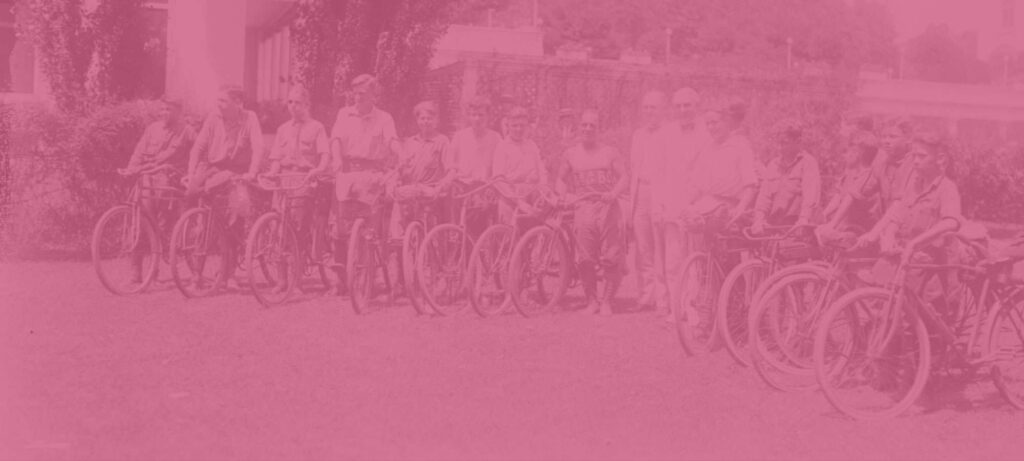
Before the internet, before custom bikes, and before Lance, it was done better. Learning to ride was an apprenticeship. The goal was to become a member of the peloton, not merely a guy who is sort of fast on a bike. Membership was the point, not to be the local Cat. 5 champ. You were invited to go ona group ride if you showed an interest and a willingness to learn. You were uninvited if you did not. You learned the skills from directly from the leader, who took an interest in riding next to you on your first rides (and not next to his friends, like better riders do today). Here is some of what you learned:
- To take your cycling shorts off immediately after a ride.
- To start with a humble bike, probably used.
- To pull without surging.
- To run rotating pace line drills and flick others through.
- To form an echelon.
- To ride through the top of a climb.
- To hold your line in a corner.
- To stand up smoothly and not throw your bike back.
- To give the person ahead of you on a climb a little more room to stand up.
- To respect the yellow line rule.
- To point out significant road problems.
- To brake less, especially in a pace line.
- To follow the wheel in front and not overlap.
The ride leader and his lieutenants were serious about their roles, because the safety of the group depended on you, the weakest link. If you did not follow the rules, you were chastised. Harshly. If you did, you became a member of something spectacular. The Peloton.
Bike Law founder and bicycle crash lawyer Peter Wilborn has raced, toured, commuted, and ridden his bike daily for fun. In 1998, Peter had a bike tragedy in his own family, realized firsthand the need for lawyers who understand cycling, and devoted his law practice to Bike Law.
-
Rachael: 8 Years At Bike Law!

Eight years ago today, Rachael Maney became the Director of Bike Law and helped co‑found the Bike Law Foundation, our non-profit arm. Today, we celebrate her success in transforming Bike Law from a national network of bicycle crash lawyers into a leading voice in bicycle advocacy and safety. When Rachael joined, Bike Law’s focus was…
-
Paul, My Brother, Rest in Peace.

If there’s one thing we know at Bike Law, it’s that behind every cycling fatality there’s grief and a longing for justice. And sometimes justice is just understanding what happened. Paul Rucker’s story reminds us of the importance of putting aside assumptions and finding the truth. Paul wasn’t perfect. None of us are. But his family…
-
From Winner to Advocate: One Cyclist’s E-Bike Journey

Two years ago, on a family trip to Switzerland, my wife and I rented two electric-assisted mountain bikes, or e-MTBs, to tackle some steep trails near the Matterhorn. The salesperson said, in no uncertain terms, that the new e-MTBs were the way of the future, and we should give them a try. So we did. …
-
A Comprehensive Guide to E-Bikes in Louisiana: Laws, Tips, and Choosing the Best E-Bike

E-bikes are popping up everywhere. If you’re riding one in Louisiana or thinking about getting one, you may have questions about the laws, safety tips, and how to pick the right bike. That’s exactly what this post is here for! We’ll break down what you need to know about riding e-bikes in Louisiana, from legal…
-
The Lisa Torry Smith Act: A Win for Cycling Safety in Texas?
The Lisa Torry Smith Act brings important changes to Texas law. It makes clear that cyclists can ride in crosswalks and now requires drivers to stop and yield before entering a crosswalk with a pedestrian or cyclist. A gap in Texas law is allowing some drivers who hit people in crosswalks to get off scot-free,…
-
Far Right?! I was taking a LEFT!

Even Bike Law lawyers get hassled. Like many of us, riding for me is stress relief; it’s an escape from conflict and a busy schedule. Sometimes incidents on the road have the opposite effect and one incident this weekend made me question the state of humanity. It was not an unusual event, nor a particularly…
-
E-BIKES ARE LEGAL IN NC (WELL, SOME OF THEM)

Love them or hate them, e-bikes continue to rise in popularity. At the same time, lawmakers struggle to keep up with the developing technologies. Every week I get multiple inquiries from people trying to navigate North Carolina’s e-bike laws. If you’re confused, you’re not alone. We could easily fill a book with all the latest…
-
BIKES & CRIMINAL JUSTICE

Many of our cycling clients find themselves having to interact with the criminal justice system. Typically, it’s because the driver who hits them (or their family member) is charged with a crime or traffic offense. Occasionally bicyclists themselves are charged with traffic offenses! Every state’s criminal laws are different, but there is a lot of…
-
Another Successful Road Defect Case, This Time a $750,000 Settlement in Georgia

We recently shared the story of a trial victory from the State of Texas where a bicyclist was injured due to a defect in a road maintained by the Texas Department of Transportation. Texas Road Defect We now can tell the story of another huge win in a road defect case, this time from our Bike Law…