Paul, My Brother, Rest in Peace.
If there’s one thing we know at Bike Law, it’s that behind every cycling fatality there’s grief and a longing for justice. And sometimes justice is just understanding what happened. Paul Rucker’s story reminds us of the importance of putting aside assumptions and finding the truth. Paul wasn’t perfect. None of us are. But his family loved him. He gave generously of his time to help others, even on the night he died. Police arrived in the middle of the night to find a man who had been fatally injured while riding a bicycle. Assumptions were made. Critical questions went unanswered. Paul’s family has been left not only with their grief, but with the uncertainty of how his life ended. For my friend Christine Rucker, telling her brother’s story and pushing for change may be the closest she ever comes to finding closure. I hope you’ll take a few minutes to read it.
By Christine Rucker
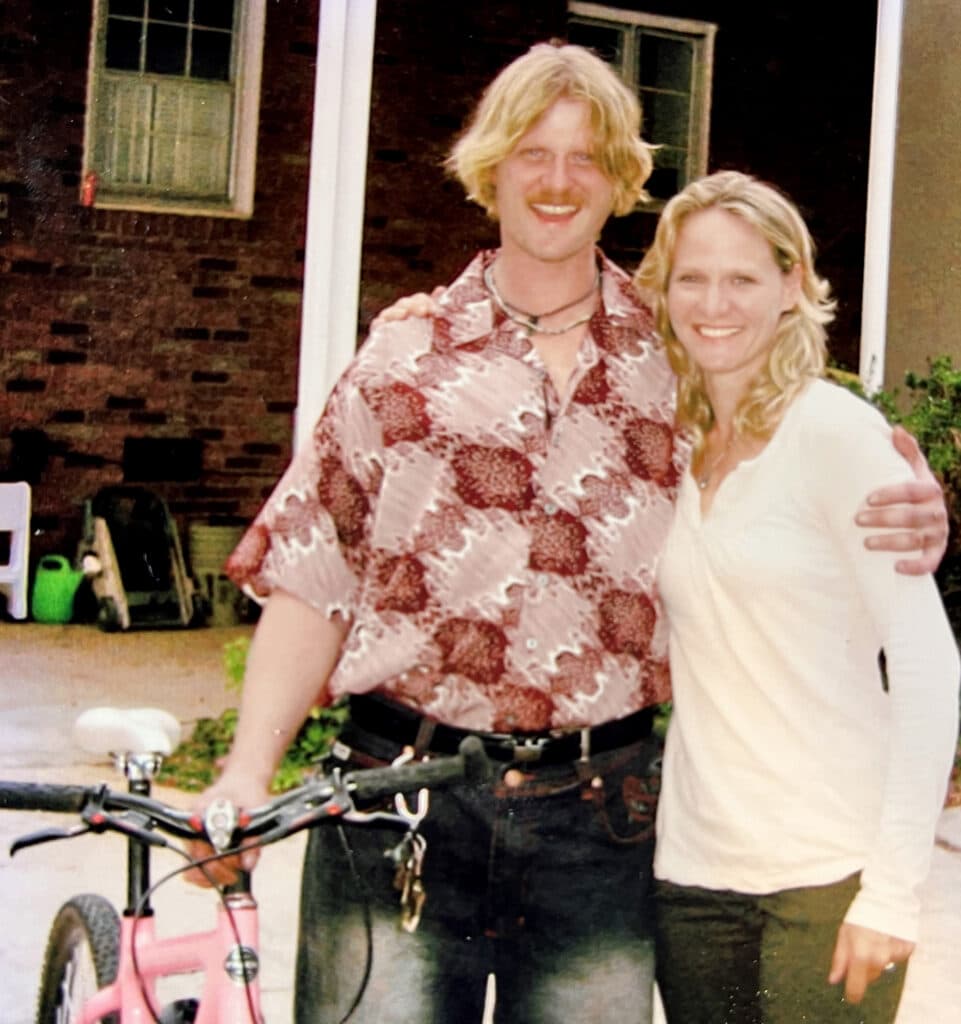
Every fourth of July I fondly remember the time my brother and I rode our bikes from our home in Charlotte to South Carolina to buy fireworks. I was eleven, Paul was thirteen. To this day, it is one of my favorite bike adventures.
Paul loved the physical challenge of riding long distances, but he primarily relied on bikes for transportation and freedom. In college, he would ride from college at NC State home for holidays and once he shipped his bike to Europe and peddled all through Holland.
My love of cycling was born from many “two wheelie adventures” with my brother and the admiration of his biking feats. I became a competitive cyclist in my twenties and have continued to keep cycling a big part of my lifestyle.
Part of that lifestyle is also losing friends to crashes involving motorists. I gradually began replacing dark jerseys with neon yellow or green for better visibility, but no amount of visibility can overcome the “motorist has right of way” culture that dominates our view of traffic enforcement.
North Carolina is one of only a handful of states that still follow a law called “pure contributory negligence.” This unforgiving, all-or-nothing rule is often called the “1% rule” for a simple reason: if you are found to be even 1% at fault for causing your injuries, you are barred from recovering any financial compensation.
This law applies to anyone in North Carolina who is injured by another person’s (or company’s) fault. However, it affects bicyclists and pedestrians disproportionately. Some people think that just being on a bike on a public road is contributorily negligent. Most cyclists don’t know that until they are the one on the other end of a car crash.
Or when someone you love is.
Paul stopped riding bikes about the time it became a sport for me.
As Paul got older, he suffered from mental challenges and addiction, but he gave back to communities in Charlotte regardless of what he was going through. He was a mobile mechanic in the Durita and Plaza Midwood neighborhoods. He often repaired people’s cars when they could not afford to take them to a mechanic. Sometimes he even paid for the parts himself.
As much as I was challenged with Paul’s mental health, I was more often proud of how he helped others.
September 28th, 2025 was one of those nights. Paul was helping a friend near W.T. Harris Blvd by rebuilding her car engine. Paul preferred to work at night because it was quiet.
He borrowed a friend’s bike to go home about 1:30 am because his driver’s license had been revoked. He was hit from behind on E. W.T. Harris Blvd. and killed instantly.
Paul did not have lights on the bicycle, and he was wearing dark clothes. No doubt a jury would find him at least 1% at fault.
The woman who hit Paul was charged with driving while license revoked, failure to register, and no liability insurance. After a basic google search, I saw that she also had several previous drug charges.
After looking over the initial crash report, one thing didn’t sit well with me. The driver was not given any toxicology test and my brother was. North Carolina laws don’t require toxicology tests for drivers in crashes, but the fact that they tested Paul, who was already deceased, and not the driver, was confusing.
When I asked the detective investigating the crash why my brother was tested, but the driver was not, his answer was “why else would your brother have been out there on a bike had he not been under the influence of something”
He also told me Paul was driving in the left lane of traffic. This put a framework in my mind that Paul likely was at fault and the motorist could not have avoided my brother. It also squarely put the legal blame for the crash on Paul.
Eight months after Paul was killed, I got the full crash report. There were three 911 phone calls in the report. I was not prepared to hear the first one.
An Uber driver called 911 after driving up to the crash. He described a different scene than the detective had described to me.
It appeared Paul had been dragged across the road into the left lane, not necessarily hit in the left lane as the crash report had shown.
It brought up many questions for me; ones that likely will never be answered. Paul’s case has been closed. I’ll never know if Paul’s crash was avoidable or if the driver was under the influence of something that was not picked up in a field sobriety test.
Charlotte says that it has made efforts to eliminate traffic deaths through the “Vision Zero” initiative launched in 2019. The City has invested millions in pedestrian crossings and better lighting on roads, but I believe preventing traffic deaths also requires better traffic laws that protect cyclists, and better enforcement of those laws. We also need to change the mindset that the roads belong to motor vehicle drivers.
Paul was the sixth cyclist fatality in Charlotte in 2025. His death is marked as a red dot on the Vision Zero interactive map. But he was more than a dot on a map.
He gave to his community, even on the night of his death. He was a beloved brother, friend and husband that was lost too soon.
I still think of my brother and our adventures when I’m out on the bike, but now I also think about his last ride, knowing that I will always live with the uncertainty about what happened, because his death was never properly investigated.
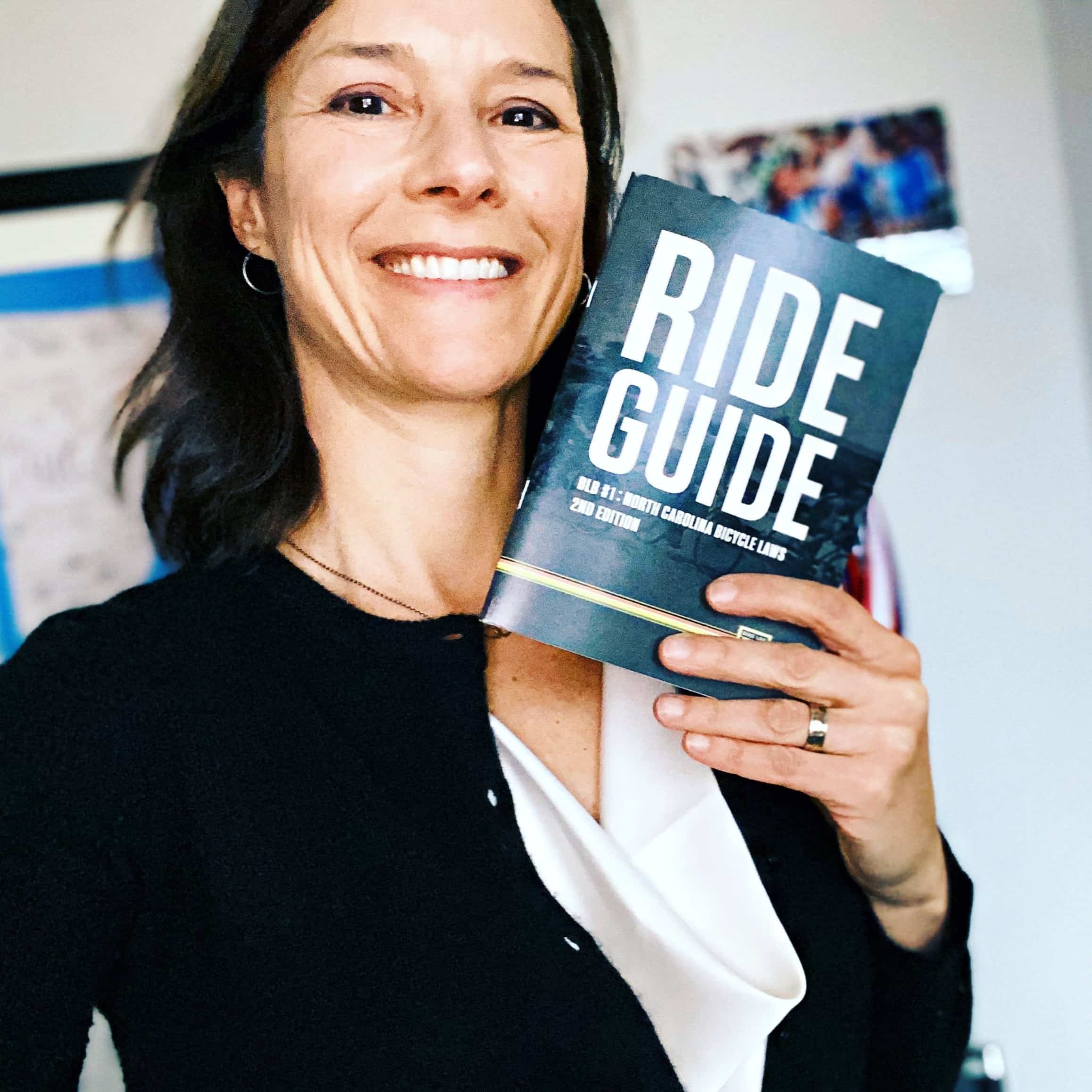
North Carolina lawyer and Bike Law founder, Ann Groninger, has advocated at the state level on behalf of bicyclists in North Carolina for over 15 years. Ann has offices in Charlotte and Durham and has helped bike accident clients in Asheville, Raleigh, Durham, Greenville, Wilmington, Fayetteville, and throughout the state. Read more about Ann on her bio page.
-
Rachael: 8 Years At Bike Law!

Eight years ago today, Rachael Maney became the Director of Bike Law and helped co‑found the Bike Law Foundation, our non-profit arm. Today, we celebrate her success in transforming Bike Law from a national network of bicycle crash lawyers into a leading voice in bicycle advocacy and safety. When Rachael joined, Bike Law’s focus was…
-
Paul, My Brother, Rest in Peace.

If there’s one thing we know at Bike Law, it’s that behind every cycling fatality there’s grief and a longing for justice. And sometimes justice is just understanding what happened. Paul Rucker’s story reminds us of the importance of putting aside assumptions and finding the truth. Paul wasn’t perfect. None of us are. But his family…
-
From Winner to Advocate: One Cyclist’s E-Bike Journey

Two years ago, on a family trip to Switzerland, my wife and I rented two electric-assisted mountain bikes, or e-MTBs, to tackle some steep trails near the Matterhorn. The salesperson said, in no uncertain terms, that the new e-MTBs were the way of the future, and we should give them a try. So we did. …
-
A Comprehensive Guide to E-Bikes in Louisiana: Laws, Tips, and Choosing the Best E-Bike

E-bikes are popping up everywhere. If you’re riding one in Louisiana or thinking about getting one, you may have questions about the laws, safety tips, and how to pick the right bike. That’s exactly what this post is here for! We’ll break down what you need to know about riding e-bikes in Louisiana, from legal…
-
The Lisa Torry Smith Act: A Win for Cycling Safety in Texas?
The Lisa Torry Smith Act brings important changes to Texas law. It makes clear that cyclists can ride in crosswalks and now requires drivers to stop and yield before entering a crosswalk with a pedestrian or cyclist. A gap in Texas law is allowing some drivers who hit people in crosswalks to get off scot-free,…
-
Far Right?! I was taking a LEFT!

Even Bike Law lawyers get hassled. Like many of us, riding for me is stress relief; it’s an escape from conflict and a busy schedule. Sometimes incidents on the road have the opposite effect and one incident this weekend made me question the state of humanity. It was not an unusual event, nor a particularly…
-
E-BIKES ARE LEGAL IN NC (WELL, SOME OF THEM)

Love them or hate them, e-bikes continue to rise in popularity. At the same time, lawmakers struggle to keep up with the developing technologies. Every week I get multiple inquiries from people trying to navigate North Carolina’s e-bike laws. If you’re confused, you’re not alone. We could easily fill a book with all the latest…
-
BIKES & CRIMINAL JUSTICE

Many of our cycling clients find themselves having to interact with the criminal justice system. Typically, it’s because the driver who hits them (or their family member) is charged with a crime or traffic offense. Occasionally bicyclists themselves are charged with traffic offenses! Every state’s criminal laws are different, but there is a lot of…
-
Another Successful Road Defect Case, This Time a $750,000 Settlement in Georgia

We recently shared the story of a trial victory from the State of Texas where a bicyclist was injured due to a defect in a road maintained by the Texas Department of Transportation. Texas Road Defect We now can tell the story of another huge win in a road defect case, this time from our Bike Law…